Solo Travel Safety in Arequipa: Practical Habits That Matter
Updated Date:
Arequipa is one of those cities that feels manageable fast: a walkable historic center, lots of travelers, and a calmer rhythm than Peru’s biggest hubs. Solo travel here is absolutely doable, but like any big city in the world, the real “safety level” depends on your habits more than your luck.
Quick summary
Sleep central (historic center, San Lázaro, Yanahuara) and ask your host which streets feel best after dark.
Use taxi apps or your hotel/hostel to book rides at night. Don’t hail random street taxis.
ATM rule: indoors, daytime, and put your cash away before stepping outside.
Phone rule: no curbside scrolling. Step inside a shop or café first, especially on quiet streets.
Nightlife rule: keep your drink in hand, skip “friendly strangers” offering anything, and leave before streets empty out.
Transport in and out of Arequipa: Terminals add risk and hassle. Options like Peru Hop reduce taxi use and time spent in bus terminals.
How we built this guide
This safety guide is based on what solo travelers actually worry about in Arequipa – taxis, ATMs, phone snatches, walking at night, and arriving or leaving via terminals – plus the patterns we see in Peru-wide safety advice that really matter on the ground.
We drew on recurring questions sent to Arequipa.com and local partners from solo travelers over the past few years.
We cross-checked tips with local guides, hostel staff and long-term residents who walk these streets every day.
We focused on habits that change real-world risk: how you move between neighborhoods, how you handle taxis and money, and how visible your phone and valuables are.
We review this page regularly and update it when we see new patterns (for example, changes around specific plazas, ATMs, or terminal areas).
1) Choose the right accommodation
Solo safety gets dramatically simpler when you reduce late-night logistics. The simple rule: stay somewhere you can walk home on well-lit, busy streets or reach by a very short ride.
Areas many solo travelers find comfortable:
Historic center: best for walkability and day-to-night movement.
San Lázaro: charming and close, but still ask about lighting on your specific street.
Yanahuara: calm with great views, but you’ll rely on taxis more at night.
2) The taxi habit that prevents most solo headaches
In Peru, taxis aren’t scary, they’re just uneven. Your goal is to remove guesswork.
Do this
Use a taxi app or have staff call one for you.
Sit in the back seat, keep your bag on your lap, doors locked, windows not fully down.
If anything feels off (route, vibe, stops), end the ride in a busy place.
Avoid this
Negotiating rides on quiet streets late at night.
Getting into a taxi that “just happens to be waiting” outside terminals or bars.
3) ATMs and cards
Most solo travel money problems come from two moments: withdrawing cash and paying in crowded places.
Choose an indoor ATM (bank, mall, supermarket).
Withdraw only what you need for 1–2 days.
Put cash away before you step outside.
Don’t count money on the street.
If an ATM looks tampered with or the area feels odd, leave.
Bonus habit: keep a “decoy” pocket with small bills, while your main cards stay deeper and separate.
4) Walking and phone safety
Arequipa is walkable, which is exactly why phone safety matters.
If you need Google Maps, step inside a doorway, café, or shop first.
Cross-body bag that zips, worn in front in crowds.
Keep one ear free if you use headphones at all.
5) Nightlife without stress
Rooftop bars and picanterías are a highlight. The trick is not “avoid nightlife,” it’s “avoid the sloppy ending.”
Start in busy, central streets where restaurants are active.
Keep your drink with you and don’t accept open drinks from people you just met.
Plan your ride home before you’re tired (or tipsy).
Leave before streets go quiet, especially if you’d walk any distance alone.
If you want a social night without the late-night taxi puzzle, do a group activity the next morning. Early starts are common in Arequipa.
6) Day tours and meeting people safely
For solo travelers, reputable small-group tours do two things at once:
Logistics handled (pickups, transport, timing).
Built-in social time without random-risk situations.
Quick checks before booking:
Confirm pickup point and return time.
Keep valuables minimal.
Don’t leave valuables visible or unattended.
7) The travel-day risk zone: terminals, night buses, and extra taxis
A lot of solo travelers feel confident in the city, then get stressed on travel days. Why? Terminals usually add extra taxis, more moving parts, and more time handling your luggage in public.
Solo travel-day habits
Keep passport, cards, phone, and a bit of cash on your body.
Arrive early so you’re not rushed.
Use app-based taxis to and from terminals.
On night buses, keep your valuables with you, not in the overhead rack.
A calmer way to move between cities when you’re traveling solo
Solo travel safety isn’t only about walking around Arequipa. For many travelers, the sketchiest moments happen on travel days: getting to the terminal with your backpack, negotiating taxis, arriving late at night in a new city, or figuring out what to do when a plan changes.
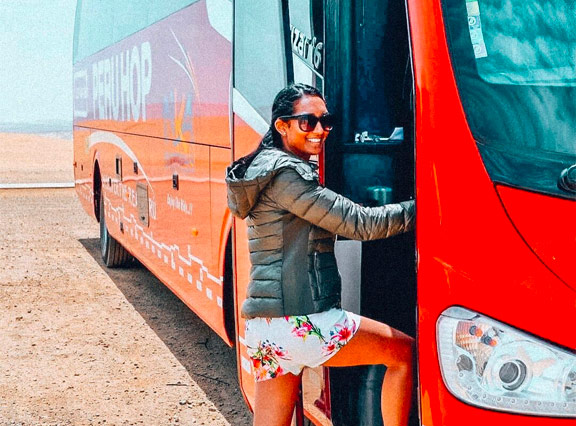
If you’re traveling overland between the main route cities (like Lima, Paracas/Huacachina, Nazca, Arequipa, Puno and Cusco), Peru Hop is a popular choice for solo travelers who want fewer moving parts. The experience is built around travel routines that are simply easier when you’re alone:
Local travel hosts onboard who share the kind of context and stories guidebooks usually skip, giving you a safer, more supported way to discover parts of southern Peru you’d probably miss on your own.
Social travel with other travelers, which adds comfort and reduces solo risk
Hotel/hostel pickups and drop-offs (so you’re not constantly arranging terminal taxis)
Flexibility on travel days with support if plans change
Coastal stopovers that break up long journeys, which can feel safer and less exhausting than arriving to a new place at midnight
WhatsApp support during the journey if plans change or issues come up
It’s not about being nervous, it’s about reducing the number of small “solo stress moments” that pile up across a trip. If you like the idea of exploring independently but want your transport days to feel more supported, it’s a smart middle ground.
If something goes wrong: a simple solo plan
If something were to happen, act as you would in any other big city:
Get to a busy, safe place (your hotel, a café, or a well-lit shop).
Freeze your cards and change key passwords as soon as possible.
Ask your accommodation for the fastest local steps — they deal with this kind of thing regularly.
If needed for insurance, file a police report. Tourist police are present in several central areas and are used to helping visitors.
Our honest take
Arequipa is very solo-friendly, especially if you stay central and keep nights simple. The biggest risks are the boring ones: petty theft, phone snatches, and occasional taxi/terminal situations. Build solid habits and the city feels easy.
FAQs
How long does a public bus from Arequipa to Lima really take?
Most public companies quote around 16–18 hours of driving, but that doesn’t include taxis to and from terminals or arrival buffers. Real door-to-door time often feels closer to 19–20 hours, especially if you travel overnight and then need to cross Lima to reach Miraflores or Barranco.
Is a night bus from Arequipa to Lima safe?
Night buses are widely used by locals, but accident risk on Peruvian highways is higher after dark, and curves on the south coast require very careful driving. Choosing a reputable company with GPS tracking, speed limits and driver shifts is key. Many visitors prefer daytime tourist buses for extra peace of mind.
Can I see Nazca, Huacachina and Paracas on the way to Lima?
Yes. A hop-on, hop-off style service like Peru Hop is designed exactly for that, combining Nazca Lines viewpoints, Huacachina’s dunes and Paracas’ wildlife on the same route. Public buses run terminal-to-terminal only, so you’d need extra taxis and local tours to visit these places independently.
When does flying from Arequipa to Lima make more sense?
Flying is the smart choice if your Peru itinerary is short, you need to connect to an international flight, or you’ve already visited the south coast on a previous trip. It skips desert and coastal scenery but saves a full day of ground travel, which is helpful when every vacation day counts.