From Lima to Arequipa in 2026, you can fly, take Peru Hop, use a direct public bus or rent a car. The distance is roughly 1,000 km by road, and direct buses usually take 16–17 hours along the Panamericana Sur.
Updated Date:
If you only have a few days in Peru and need to move fast between Lima and Arequipa, flying wins. The flight itself is about 1 hour 25 minutes, but you should budget extra time for Lima’s traffic out to Jorge Chávez International Airport, check-in, boarding and the usual chance of delays. Going from sea level in Lima to around 2,300m in Arequipa is still a sudden jump, and some travelers feel mild altitude symptoms like headache or shortness of breath, so take it easy on arrival: hydrate, avoid heavy meals, and give yourself a relaxed first day in the White City.
Best for:
Those on tight itineraries, business trips, or anyone who wants to go city-to-city as fast as possible and doesn’t mind missing the coast.
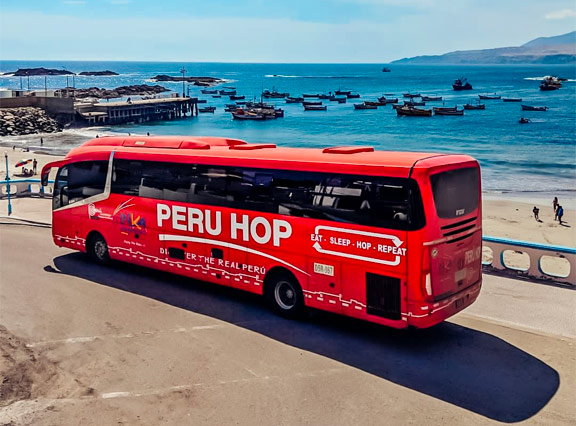
Peru Hop gives travelers a more local way to see southern Peru, mixing carefully chosen off-the-radar stops with friendly onboard hosts who share real stories about life here, not just the highlights from a guidebook. It’s a safe, flexible and genuinely fun way to travel, with hop-on hop-off style routes, hotel and hostel pick-ups, and stops in places like Paracas, Huacachina, Nazca, Arequipa, Puno and Cusco. For Lima–Arequipa, it works both as a relaxed way to arrive in the White City and as the perfect backbone if you plan to continue your adventure around southern Peru afterwards.
Peru Hop doesn’t run one long direct night bus from Lima to Arequipa. Instead, it connects the route in stages: usually Lima → Paracas → Huacachina → Nazca → Arequipa, with hotel/hostel pick-ups and drop-offs in each stop.
On a typical itinerary you might:
Key features:
Most travelers take 2–4 days to go from Lima to Arequipa this way. Each segment is shorter and more relaxed than a 16–18 hour night bus, and you arrive in Arequipa having already seen a big part of the south coast.
Compared with public buses, most travelers feel the extra they pay is worth it for the hotel pick-ups, English-speaking support and added safety net if strikes or delays pop up.
Traditional intercity buses go direct from Lima to Arequipa via the Panamericana Sur.
These buses mainly serve Peruvians moving between cities, not tourists specifically, which is why the experience can feel very “local” and DIY rather than curated for visitors.
A few things to consider that don’t show on the timetable:
Public buses are functional A→B transport, but they don’t include hidden stops, cultural context or much hand-holding if things go wrong.
If you want a sense of what other travelers actually experience, the Tripadvisor pages for the main companies are quite revealing. Reviews fluctuate over time, but at the time of writing:
You can check the latest feedback here:
Across these pages, the pattern is pretty consistent: locals use them a lot, but there’s also a noticeable number of recent low-star reviews about delays, cleanliness, toilets and communication, especially compared to more traveler-focused options like Peru Hop.
Best for:
Local travelers who need a straightforward, low-cost way to get from one city to another and are focused purely on transport, not sightseeing or extra stops along the way.
Driving from Lima to Arequipa in a rental car gives you full control over timing and side trips, but it’s a long haul with real stress points. The journey is roughly 1,000 km following the Panamericana Sur (PE-1S) and connecting roads, and usually means 14–16 hours of actual driving, even in good conditions. The first challenge is simply getting out of Lima: city avenues are frequently overcrowded, lane discipline is loose, and navigation can be overwhelming if you don’t know the area. Once you hit the highway, you still share the road with fast buses and trucks, frequent overtaking and a driving style that often ignores speed limits and road markings.
For foreigners, that mix of aggressive driving habits, occasional unclear signage and long distances can quickly turn from “freedom” into fatigue. On top of that come the financial and logistical costs: rental rate plus insurance, fuel and tolls, and paying for secure parking in both Lima and Arequipa, where cities aren’t built around abundant free street parking. You’re also responsible for any damage disputes, police checks and breakdowns. When you add it all up, the combination of city traffic, highway behavior and rental responsibilities makes bus-based options or Peru Hop much more practical for most visitors, especially first-timers who’d rather enjoy the views than fight their way down the Panamericana.
We reviewed 2025 timetables and typical prices for flights, long-distance buses and rental cars on the Lima–Arequipa corridor, and combined that with our own on-the-ground experience and recent traveler feedback. The comparisons focus on what actually matters once you’re here: true door-to-door time, safety and comfort, taxi and terminal hassle, and how much of the journey feels like part of your trip rather than just transport.
For most travelers, Peru Hop is worth it. Public buses can move you between cities, but you’re on your own with busy terminals, taxi negotiations and last-minute changes. With Peru Hop you get hotel pick-ups, an English-speaking onboard host, constant WhatsApp help and extra coastal stops you’d usually miss, so the overall trip tends to feel smoother, safer and more enjoyable.
On schedules, most direct buses show 16–18 hours. In reality, you should also add time to reach the terminal in Lima, collect luggage and take a taxi in Arequipa. Delays from traffic, roadworks or earlier legs are common, so it’s safer to think of it as a full travel day or night rather than a precise arrival time.
Major companies run modern fleets and many trips are uneventful, but accidents on Peruvian highways do happen. Choose well-known operators, avoid the very cheapest options, keep valuables with you and avoid arriving completely alone very late at night. If you prefer more support and communication in English, Peru Hop is a safer-feeling alternative.
You can drive, but it’s a long, demanding route of about 1,000 km and 14–16 hours of actual driving. Leaving Lima’s traffic, dealing with aggressive highway driving, tolls, fuel, parking and rental responsibilities means self-drive is only recommended for very confident drivers used to Latin American conditions. Most visitors are happier letting someone else drive.
Most travelers take 2–4 days to travel from Lima to Arequipa with Peru Hop. A common plan is one night in Paracas and one in Huacachina, with time for the Ballestas Islands, Paracas National Reserve and dune buggies in the desert. You can always add extra nights at each stop if you want a slower coastal itinerary.
Arequipa is around 2,300 m, which is lower than Cusco but still a jump from sea level. Some people feel mild symptoms like headache or shortness of breath on the first day, especially if they arrive tired or dehydrated. Take it easy, drink water, avoid heavy meals and give yourself a relaxed program when you first land.
No, there is currently no regular passenger train between Lima and Arequipa. Travelers choose between flights, overland options like Peru Hop or direct long-distance buses, and a small minority decide to rent a car for the route.